
Creatine Monohydrate Australia
Creatine Monohydrate Powder in Australia
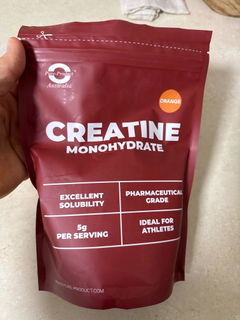
Search "creatine monohydrate Australia" and you'll find no shortage of options, most of them making similar claims. Here's the honest version: creatine monohydrate is the most researched sports supplement there is, backed by decades of studies on strength, power output and lean muscle gains, which is exactly why it's still the form we build our range around. Ours is pure, unflavoured and mixes easily into water or a shake, with a lab-tested Crea-PCr® formula available for anyone training at a higher intensity. Both are made and packed in Australia and independently tested for purity, so what's printed on the label is genuinely what's in the tub.
Monohydrate vs HCl: Why We Stick With Monohydrate
If you've compared creatine monohydrate vs HCl (hydrochloride) while shopping around, the short answer is that monohydrate wins on the evidence. HCl is marketed on claims of better solubility and less bloating, but there's nowhere near the volume of research behind it that monohydrate has, and no solid proof it outperforms monohydrate at an equal dose. It's also usually priced higher for a smaller effective serve. That's the reason you won't find HCl in our range: monohydrate does the job at a lower cost per gram, with a research base that goes back further than most other sports supplements on the shelf.
What Actually Makes the Best Creatine for Muscle Growth
People often go looking for the best creatine for muscle growth expecting some hidden advanced formula, when really the answer is closer to "the one you'll actually take every day." Your body already stores a small amount of creatine as phosphocreatine, a quick-access fuel source for short, hard efforts like a heavy set or a sprint. Supplementing tops that store up, giving your muscles more to draw on during those explosive moments. The effect builds over weeks, not overnight, showing up as slightly more reps or slightly faster recovery between sets. Plain monohydrate gets you there. Our Crea-PCr® formula pairs monohydrate with phosphocreatine for athletes wanting extra support for ATP re-synthesis between hard efforts, but neither one is "better" outright, it depends on your training and whether the more advanced formula suits your goals.
The Creatine Loading Phase, Explained
A creatine loading phase means taking a larger dose, often split across the day, for about a week to saturate your muscles faster. It works, but it isn't required. A steady 3-5g daily gets you to full saturation too, it just takes three to four weeks instead of one. Unless you're chasing a specific event or deadline, skipping the loading phase and staying consistent day to day is the simpler, equally effective route.
Clearing Up the Water Retention Myths
Creatine doesn't damage healthy kidneys at standard doses, decades of research back this up, though anyone with existing kidney disease should check with their doctor first, as with any supplement. It isn't a steroid either, it's an amino acid derivative your body already produces and stores from foods like red meat. The 1-2kg some people notice in the first week or two is water drawn into the muscle itself, not the puffy bloating people sometimes worry about, and it settles down as your body adjusts to a fuller creatine store.
Research on creatine has historically focused more on male athletes, which reflects a gap in study samples rather than a gap in how well it works. The benefits and safety profile look much the same across men and women, and there's no need to adjust the standard dose based on sex, women can take the same daily amount as men without any special adjustment.
Who Creatine Actually Helps
Creatine isn't only for powerlifters and bodybuilders. Anyone doing repeated short, hard efforts benefits, whether that's a footballer sprinting up and down a wing, a swimmer doing interval sets, or someone doing circuit-style training a few times a week. If your sport or training style leans purely steady-state, a long, even-paced run with no surges, the benefit is smaller, since that's not the type of effort creatine's stored energy pathway is built for. For nearly everyone else lifting, sprinting or training with any kind of intensity, it's one of the few supplements with genuinely consistent research behind it.
Stacking Creatine With the Rest of Your Routine
Creatine mixes into a protein shake without any issue, plenty of people add their daily dose straight into their post-training whey. It also sits fine alongside a caffeinated pre-workout, an older study raised concerns about caffeine blunting creatine's effects, but that hasn't held up in more recent research. There's no need to separate the two or time them carefully around each other, take your creatine whenever suits your day and let the rest of your supplement routine run as normal alongside it.
Quick Picks by Goal
- Best all-round starting point: Creatine Monohydrate, the most researched form and the right default for almost everyone.
- Best for high-intensity or advanced training: Crea-PCr®, for athletes wanting extra support for ATP re-synthesis between hard efforts.
Frequently Asked Questions
Should I choose monohydrate or HCl?
Monohydrate. It has decades more research behind it, costs less per effective gram, and there's no solid evidence HCl outperforms it at an equivalent dose. We stock monohydrate and our Crea-PCr® formula for exactly this reason.
Do I need a loading phase, or can I just take a maintenance dose?
Loading is optional. A higher split dose for the first week saturates your muscles faster, or you can take a steady 3-5g daily maintenance dose and reach full saturation in three to four weeks instead.
Will creatine make me hold water or look bloated?
You might see 1-2kg in the first week or two, but that's water drawn into the muscle, not fat gain or the kind of bloating that makes you look soft. It's a normal, expected part of how creatine works and settles as your body adjusts.
Who should take creatine?
Most healthy adults training regularly, whether lifting, playing team sport or doing interval-style cardio, can benefit. It's one of the few supplements with genuinely broad, well-established support behind it, and there's no real reason for a beginner to hold off starting alongside their training.
Is creatine safe for women to take?
Yes. The research base is smaller for women specifically, largely because early studies focused more on male athletes, but the benefits and safety profile match what's seen in men, and the standard 3-5g daily dose applies regardless of sex with no adjustment needed.
What's the best time to take creatine, before or after training?
Consistency matters more than exact timing. Many people take it post-workout or with a meal out of habit, but any time of day that helps you stay consistent every single day, even on rest days, works just as well as timing it precisely around a session.
How long until I notice a difference?
Most people notice small gains in strength or reps within three to four weeks of consistent daily use, sooner if you choose to load in the first week. If you've eaten a lot of red meat historically your starting stores may already be higher, so give it a full eight to twelve weeks alongside your normal training before judging whether it's working for you.
4 products
-

 100% Pure Micronised Creatine Monohydrate Powder100% Pure Micronised Creatine Monohydrate Powder
- Regular price
-
$26.00 AUD - Regular price
-
- Sale price
-
$26.00 AUD
Quick view
-

 Crea-PCr Creatine | Fast ATP Energy | AustraliaCrea-PCr Creatine | Fast ATP Energy | Australia
- Regular price
-
$26.00 AUD - Regular price
-
- Sale price
-
$26.00 AUD
Quick view
-
 Crea-PCr Creatine | Fast ATP Energy | Australia 25kg BULKCrea-PCr Creatine | Fast ATP Energy | Australia 25kg BULK
- Regular price
-
$1,000.00 AUD - Regular price
-
- Sale price
-
$1,000.00 AUD
Quick view
-
100% Pure Micronised Creatine Monohydrate Powder 25KG BULK100% Pure Micronised Creatine Monohydrate Powder 25KG BULK
- Regular price
-
$1,000.00 AUD - Regular price
-
- Sale price
-
$1,000.00 AUD
Quick view