Whey Protein Australia | Grass-Fed Protein Powder
Whey Protein Australia: Premium Grass-Fed Protein
If you've typed "whey protein powder Australia" into Google, you've probably noticed the shelf gets crowded fast. Every brand claims to be premium, every tub says "lab-tested," and the actual difference between them rarely gets explained in plain language. So here's the short version: whey protein is simply the protein separated out of milk during cheese-making, and once it's dried into powder it becomes one of the easiest ways to hit your daily protein target without cooking a chicken breast at 9pm. Our range is made from New Zealand grass-fed whey, independently lab-tested for purity, and sold unflavoured or in a handful of proper flavours rather than a dozen gimmicky ones.
Whey Protein Isolate vs Concentrate (and Where Blends Fit In)
This is the question we get asked more than any other, so it's worth spending real time on. All whey starts life the same way, as a by-product of cheese production, and the difference between Isolate, Concentrate and a blend comes down to how much further it's filtered afterwards.
Whey Protein Concentrate (WPC) is the least processed of the three, sitting around 70-80% protein by weight, with a bit more lactose, carbs and fat left in. That's not a downside so much as a trade-off: WPC costs less per serve and tends to taste noticeably creamier, since fat carries flavour. For most people training a few times a week and eating reasonably well otherwise, WPC does everything it needs to.
Whey Protein Isolate (WPI) goes through an extra filtration step that strips out most of the remaining lactose, carbs and fat, pushing protein content above 90%. It costs more for that privilege, but it's the better call if you're lactose-sensitive, cutting calories, or you just want the leanest possible macros per scoop. This is genuinely the whey protein isolate vs concentrate debate in a nutshell: WPC for value and taste, WPI for purity and a lighter stomach.
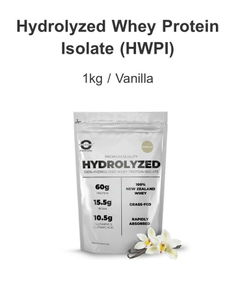
Then there's Hydrolysed Whey Protein Isolate (HWPI), which takes isolate a step further by partially breaking the protein down before you even drink it, so your body doesn't have to do as much of that work. It absorbs faster than either WPC or WPI, which is why it tends to get picked up by people training twice a day or chasing every possible edge post-session.
Our Complex Protein blend takes a different approach entirely: rather than filtering harder, it combines WPI, WPC and micellar casein in one tub, so you get a quicker amino acid spike early plus a slower release over the next few hours. It's a genuinely useful option if you don't want to buy a fast protein and a slow protein separately, since one scoop covers both jobs, whether that's after training or last thing before bed.
What Actually Makes the Best Whey Protein for Muscle Gain
Here's something that surprises a lot of people: when it comes to building muscle, the type of whey you pick matters far less than whether you're actually hitting your total protein and calories for the day. WPC, WPI, HWPI and Complex Protein are all complete proteins loaded with the amino acids (leucine especially) that trigger muscle repair, so any of them will support growth provided you're training with intent and eating enough overall.
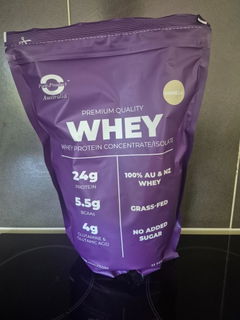
Where the choice does matter is fit. If budget is the deciding factor and you tolerate dairy fine, WPC is the best whey protein for muscle gain simply because it lets you buy more of it and stay consistent, which matters more long-term than a marginal difference in filtration. If you're bulking and need calories, WPC or our Whey Protein Blend (which mixes WPC and WPI) both work well since they carry a touch more fat and carbs alongside the protein. If you're cutting or your stomach doesn't love dairy, WPI keeps the protein high without the extra baggage.
For anyone going through serious volume, whether that's a household with a few lifters or a gym supplying members, the 20kg bulk bags of both WPC and WPI bring the price per serve down substantially and cut out the constant reordering.
How Much Protein Do You Actually Need Each Day
Most active adults do well somewhere between 1.6 and 2.2 grams of protein per kilogram of bodyweight daily. Someone around 75kg training regularly is looking at roughly 120-165g spread across the day. A single scoop of whey supplies somewhere between 24 and 27g depending on the product, so realistically it's closing the gap between what a normal day of meals provides and what your training actually demands, rather than replacing food outright.
A Few Things Worth Knowing Before You Buy
The idea that you need a shake within 30 minutes of finishing your last set has been walked back by more recent research. Total protein across the day counts for a lot more than the exact minute you drink it, so a shake is best thought of as a convenient way to get a solid dose in when a proper meal isn't practical, whether that's straight after training or first thing in the morning if breakfast is usually just a coffee. On the other side of that, we'd steer you away from leaning on shakes as a full meal replacement too often. They're an excellent top-up, but an actual meal still gives you fibre, healthy fats and a wider spread of nutrients that powder alone won't cover.
Not sure where to start? Our whey isolate vs concentrate comparison and guide to protein powder types go into more depth if you want the full picture before choosing.
Quick Picks by Goal
- Best value: Whey Protein Concentrate (WPC), the most affordable everyday option.
- Best for cutting or a lean diet: Whey Protein Isolate (WPI), the leanest macros per scoop.
- Best for fastest absorption: Hydrolysed WPI (HWPI), for post-session or twice-a-day training.
- Best all-in-one: Complex Protein, a blend that covers post-workout and before bed in one tub.
- Best lighter option: Protein Water, for a lower-calorie top-up between meals.
- Best for bulk buyers or gyms: our 20kg WPC or WPI bulk bags, for the lowest price per serve.
Frequently Asked Questions
What's the real difference between WPI, WPC and a blend?
WPC sits around 70-80% protein with a little extra lactose, carbs and fat left in, and is the more affordable, creamier-tasting option. WPI is filtered further to 90%+ protein with most of that lactose and fat stripped out, suiting cutting phases or a sensitive stomach. A blend like our Complex Protein combines WPI, WPC and casein for a faster release early and a slower one over several hours, useful for one tub that covers post-workout and before bed.
How much whey protein should I take per day?
Most people do well with one to two servings daily on top of what they're already eating, adjusted to their total protein target and training load. A single scoop after training is the most common approach, with a second serve added on heavier training days.
When's the best time to take whey protein?
Straight after training still works fine, but it's not the only window that matters. Total daily protein intake drives results more than timing, so a shake in the morning, between meals, or before bed (especially with Complex Protein's slower-digesting casein) counts just as much as a post-workout shake.
I'm lactose intolerant or dairy-sensitive, will whey upset my stomach?
Possibly, depending on the type. WPC still contains a meaningful amount of lactose, making it the most likely to cause discomfort. WPI and our Hydrolysed WPI have had most of the lactose filtered out and sit much better with sensitive stomachs. If isolate still causes bloating, a plant-based protein is worth considering instead.
How do I pick a flavour, and is unflavoured worth it?
Unflavoured is the most versatile option since it blends into smoothies, oats or baking without changing the flavour of whatever it's added to. Vanilla and Chocolate suit a straightforward shake with milk or water, while Cookies & Cream feels more like a treat. If unsure, a 1kg tub in a flavoured option is the easiest way to find what you like before committing to a bulk bag.
What's the best way to mix whey protein so it doesn't clump?
A shaker with a mixing ball or mesh insert makes the biggest difference over stirring with a spoon. Add liquid first, then the powder, and shake for a solid 15-20 seconds. Cold water or milk mixes more smoothly than room temperature, and a blender gives the smoothest result if you're adding oats, fruit or peanut butter as well.
9 products
-

 Whey Protein Blend | WPC + WPI | Grass-Fed AUWhey Protein Blend | WPC + WPI | Grass-Fed AU
- Regular price
-
$59.00 AUD - Regular price
-
- Sale price
-
$59.00 AUD
Quick view
-

 Whey Protein Concentrate | Grass-Fed WPC | AustraliaWhey Protein Concentrate | Grass-Fed WPC | Australia
- Regular price
-
$59.00 AUD - Regular price
-
- Sale price
-
$59.00 AUD
Quick view
-
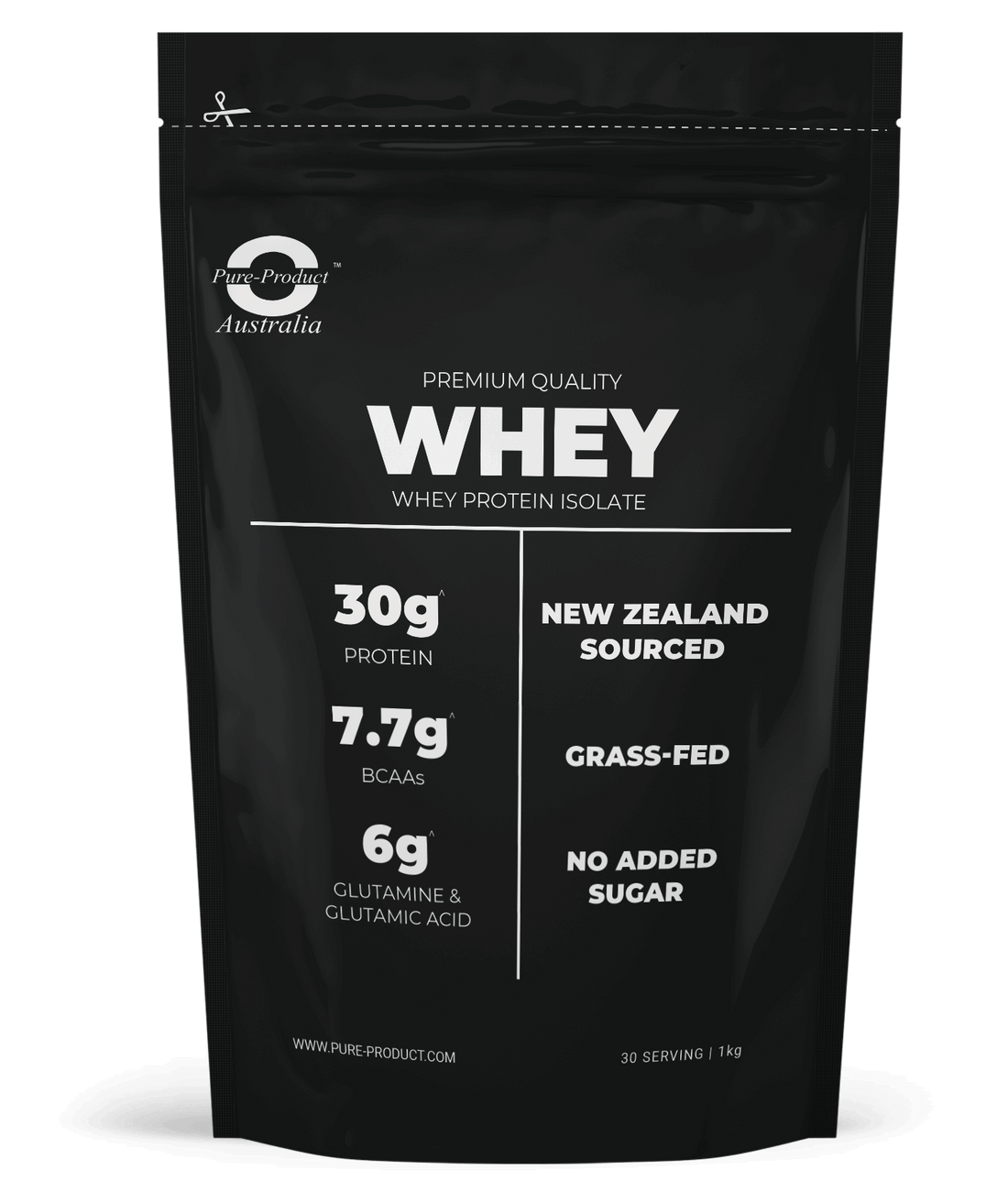
 Grass-Fed Whey Protein Isolate (WPI)Grass-Fed Whey Protein Isolate (WPI)
- Regular price
-
$79.00 AUD - Regular price
-
- Sale price
-
$79.00 AUD
Quick view
-

 Hydrolyzed Whey Protein Isolate (HWPI)Hydrolyzed Whey Protein Isolate (HWPI)
- Regular price
-
$95.00 AUD - Regular price
-
- Sale price
-
$95.00 AUD
Quick view
-

 Clear Protein WaterClear Protein Water
- Regular price
-
$39.00 AUD - Regular price
-
- Sale price
-
$39.00 AUD
Quick view
-

 Bulk Whey Protein Concentrate - 20kg BagBulk Whey Protein Concentrate - 20kg Bag
- Regular price
-
$1,180.00 AUD - Regular price
-
- Sale price
-
$1,180.00 AUD
Quick view
-
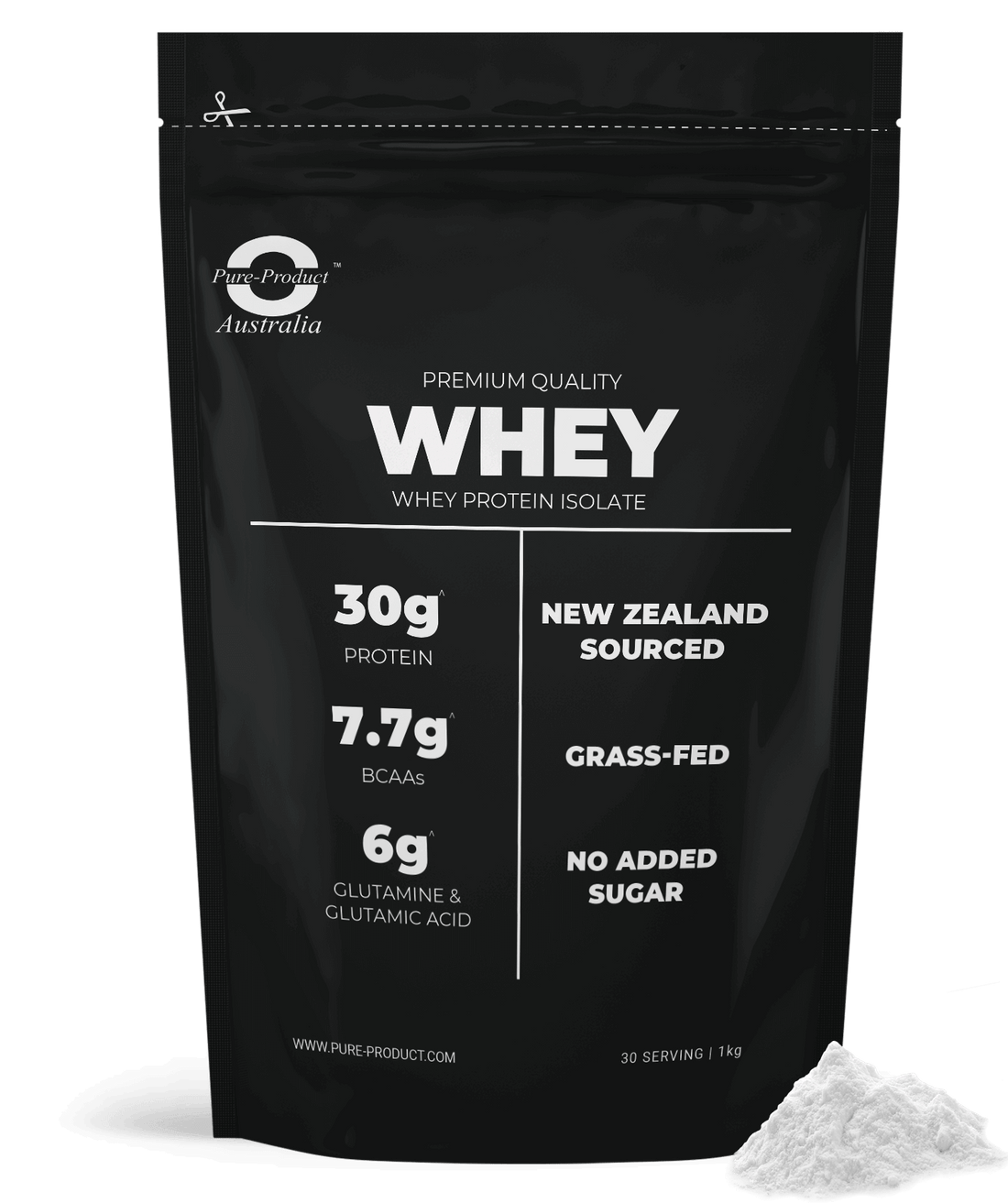 Whey Protein Isolate (WPI) 20KG Bulk AustraliaWhey Protein Isolate (WPI) 20KG Bulk Australia
- Regular price
-
$1,500.00 AUD - Regular price
-
- Sale price
-
$1,500.00 AUD
Quick view
-
![Complex Protein [WPI/WPC/CASEIN]](//pure-product.com/cdn/shop/files/COMPLEX-UNFLAVOURED.png?v=1723163264&width=1100)
 Complex Protein -Protein BlendsComplex Protein -Protein Blends
- Regular price
-
$59.00 AUD - Regular price
-
- Sale price
-
$59.00 AUD
Quick view
-
 Calcium Caseinate 20kg BulkCalcium Caseinate 20kg Bulk
- Regular price
-
$1,180.00 AUD - Regular price
-
- Sale price
-
$1,180.00 AUD
Quick view


![Complex Protein [WPI/WPC/CASEIN]](http://pure-product.com/cdn/shop/files/COMPLEX-UNFLAVOURED.png?v=1723163264&width=1100)